China monkey
Mario Amura
Chongqing, China – 2011
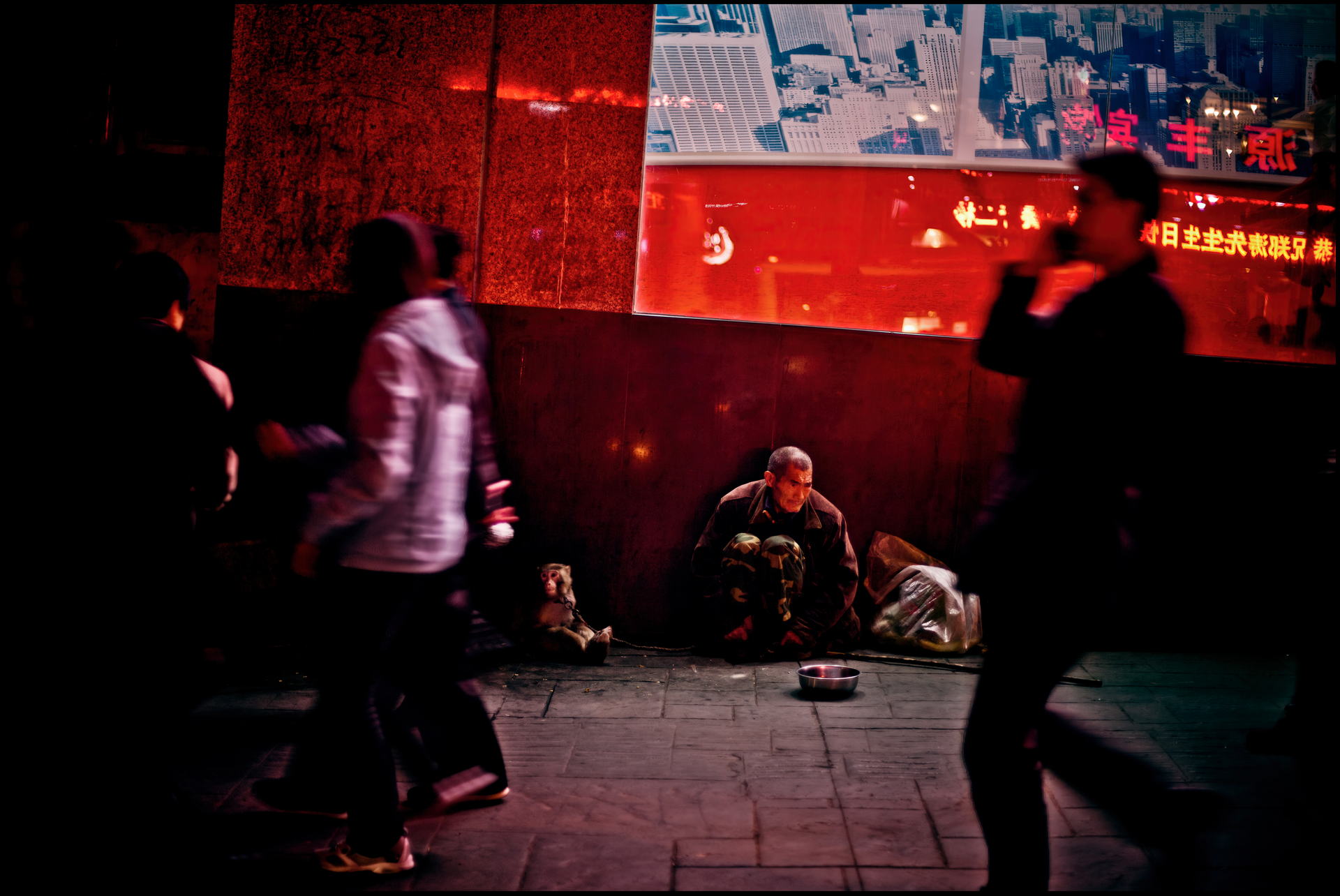
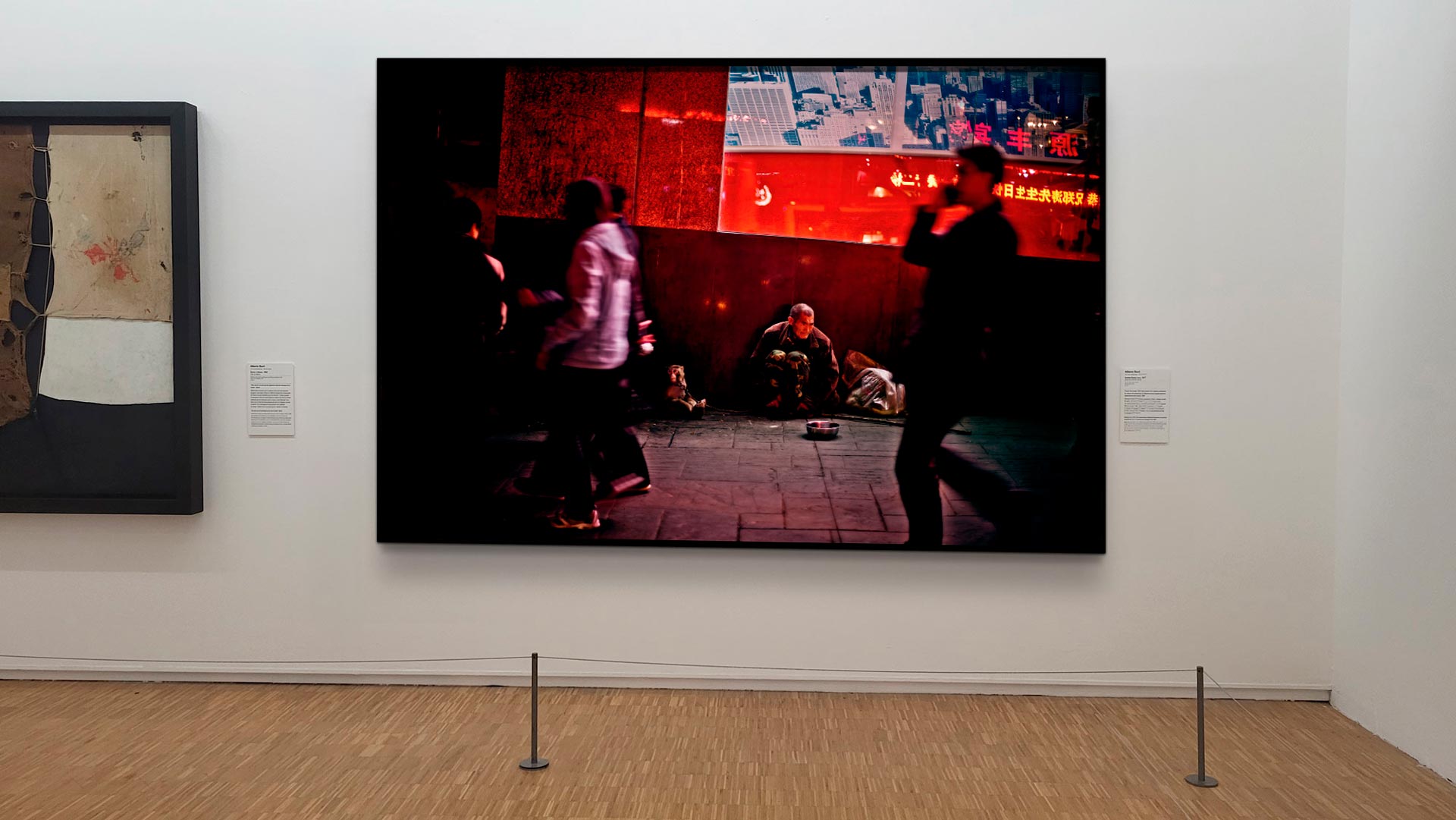
Amid the bustle of a street in Chongqing, a man crouches on the pavement beside a small monkey held by a chain. In front of them, a metal bowl awaits a few coins. All around, the city flows past, indifferent: passers-by drift through the frame like shadows, fleeting presences rendered almost unrecognisable by movement. Only the man and the animal seem removed from this ceaseless flow.
In Brueghel’s Two Monkeys, Wisława Szymborska imagines herself taking an examination on the history of humanity before two chained monkeys. One of them, through the gentle clinking of its chain, offers the poet the answer she cannot find.
In Amura’s photograph, that question seems to resurface in another form. The chain restraining the monkey becomes the visible sign of a captivity that extends to the man himself, stranded on the margins of a city racing towards wealth and progress. In the background, the red glow of illuminated signs and images of skyscrapers celebrate a prosperity from which both figures appear excluded.
It is precisely in the crowd’s apparent indifference that the image finds its deepest tension. Those passing through the scene are free to move, but perhaps not to see. Those who remain still, by contrast, compel us to stop and look.
As in Szymborska’s poem, the chain thus ceases to belong solely to the animal and becomes a silent question about the human condition: who is truly captive, and who can claim to be free?